King Arthur & Merlin’s Cave: History and Legend at Tintagel
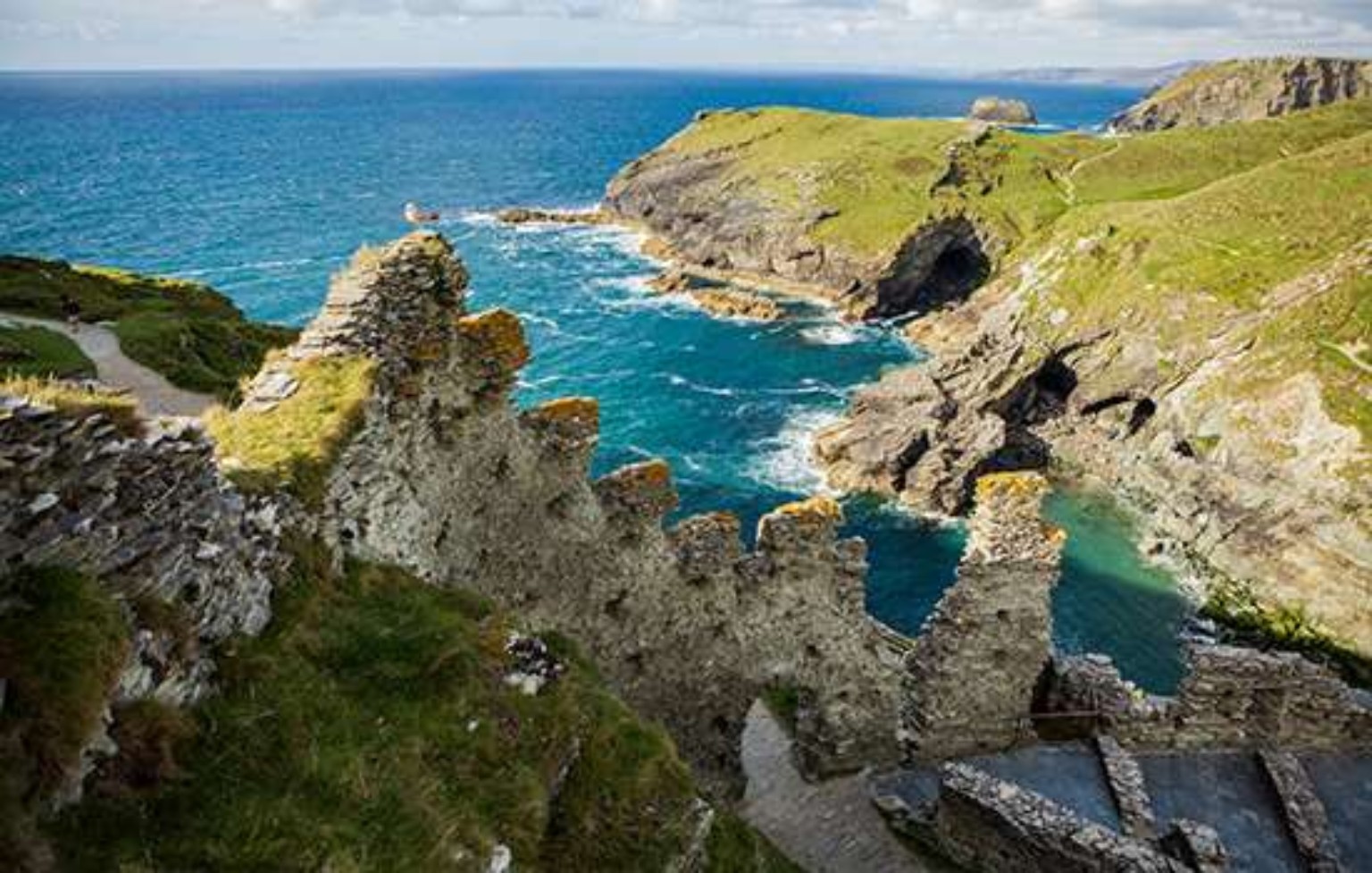
High above Cornwall’s Atlantic coastline, Tintagel is a place where history and imagination meet. Ruined walls cling to the headland, waves roll into the haven below, and Merlin’s Cave adds a touch of mystery to an already dramatic landscape.
For walkers who enjoy stories as much as scenery, this corner of Cornwall has plenty to offer.
The legend of King Arthur
Tintagel’s famous connection with Arthur comes from Geoffrey of Monmouth’s History of the Kings of Britain, written in the 12th century.
In his story, Merlin uses magic to disguise Uther Pendragon as Gorlois, the husband of Igraine. Through this deception, Uther gains access to her at Tintagel, where Arthur is conceived.
It is a dark tale of magic and betrayal, rather than a straightforward royal romance. Although it became central to Tintagel’s identity, it remains legend—not proof that Arthur lived here.
The history behind the ruins
Tintagel’s real past is fascinating in its own right. Between the 5th and 7th centuries, the headland was an important stronghold associated with Cornwall’s rulers.
The medieval castle ruins visible today belong to a later chapter. Richard, Earl of Cornwall, built his castle here in the 1230s, possibly drawn by the site’s already powerful Arthurian associations. The legends may therefore have helped shape the very buildings visitors come to see.
Merlin’s Cave
Beneath the castle headland lies the sea cave now known as Merlin’s Cave. Its name has been recorded since the late 19th century, showing how Tintagel’s stories continued to grow long after the medieval period.
Alfred, Lord Tennyson helped strengthen these connections through his Arthurian poetry. In his telling, Merlin discovers the infant Arthur carried ashore by a wave at Tintagel—a memorable image that blends the wild coastline with the world of legend.
A landscape that invites imagination
On the headland stands Gallos, a bronze figure inspired by Arthurian legend and Tintagel’s royal past. Against the sea and sky, it offers a modern expression of the stories that have drawn people here for centuries.
Whether you come for the castle, the coastal scenery or the folklore, Tintagel offers something special: a landscape where the documented past is compelling and the legends remain hard to resist.
Visiting the cave
Merlin’s Cave can be explored when the tide is out and conditions allow. Check local tide times, heed closures and warning signs, and leave plenty of time to return before the sea rises. Avoid entering in rough seas. Access around Tintagel involves steps and uneven ground.
Sources and further reading
Explore my South West Coast Path reports, discover the Hairy Hands of Dartmoor, or browse more stories on the Blog.
Have you explored Tintagel or Merlin’s Cave?
Share your experience in the comments—or tell me which Cornish legend I should explore next.
Leave a comment about this story